Author: Alice He

  • Military Drone Tech: The Power Systems Driving Modern Warfare

    Military Drone Tech: The Power Systems Driving Modern Warfare

    Military Drone Tech: The Power Systems Driving Modern Warfare

    Military drone technology has evolved from niche tools to central assets in modern defense strategies. These unmanned aerial vehicles (UAVs) perform tasks too dangerous or tedious for human pilots, from surveillance to precision strikes. At the heart of every reliable military drone lies its power system—a component that defines its endurance, agility, and mission success. As conflicts grow more dynamic, the demand for advanced batteries to fuel military drones has never been higher.

    The Core Roles of Military Drone in Modern Operations

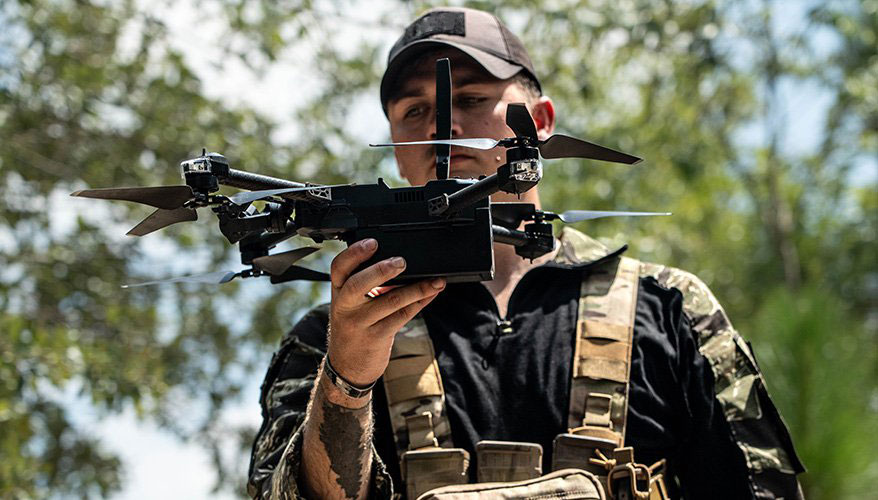
    Military drones span a wide range of sizes and capabilities, each tailored to specific battlefield needs. Small tactical drones, weighing just a few kilograms, support infantry units with real-time reconnaissance. Medium-altitude long-endurance (MALE) models like the MQ-9 Reaper stay airborne for 24+ hours, monitoring large areas or engaging targets. High-altitude long-endurance (HALE) drones operate at 60,000+ feet, collecting intelligence without detection.
    Each role places unique demands on the military drone’s power source. A tactical drone needs quick bursts of energy for evasive maneuvers. A MALE military drone requires steady, long-lasting power to maintain surveillance over remote regions. In 2024, the U.S. Department of Defense reported that 78% of military drone mission failures stemmed from power-related issues, highlighting the critical link between batteries and operational effectiveness.

    Key Power Requirements for Drone Performance

    Military drone batteries must overcome three core challenges that civilian UAV batteries rarely face. First is extreme environmental resilience. These drones operate in deserts with 50°C heat, Arctic conditions below -30°C, and high-altitude low-pressure zones. Batteries must maintain output without swelling or short-circuiting.
    Second is high discharge reliability. A military drone carrying weapons or high-resolution sensors needs consistent power to avoid mid-mission shutdowns. Sudden voltage drops can compromise targeting systems or leave the UAV vulnerable to enemy detection. Third is lightweight design—every gram of battery weight reduces payload capacity for cameras, missiles, or communication gear.
    In 2023, a NATO study found that modern military drones require batteries with at least 350 Wh/kg energy density to meet mission requirements. Traditional lithium-ion batteries often fall short, especially in extreme temperatures, prompting the shift to advanced chemistries.

    Advancements in Battery Tech for Drone

    The race to power military drones has driven breakthroughs in battery technology. Semi-solid state batteries, with gel-like electrolytes, have emerged as a game-changer. They offer 20-30% higher energy density than conventional lithium-polymer batteries and resist thermal runaway—a critical safety feature for military operations.
    Another innovation is adaptive battery management systems (BMS). These systems adjust power output based on the military drone’s task: boosting energy for takeoff, conserving it during cruising, and prioritizing critical systems if power runs low. In 2024, Israel’s Elbit Systems integrated adaptive BMS into its Hermes 900 drone, extending flight time by 18% without increasing battery weight.
    Fast-charging technology also plays a role. Military units in the field can’t wait hours to recharge drones. New batteries support 45-minute fast charging to 80% capacity, enabling rapid redeployment. This capability proved vital during the 2025 border security operations in Eastern Europe, where drones were recharged and reused multiple times per day.

    Future Trends: Powering the Next Generation of Military Drone

    The next decade will bring even more advanced power solutions for military drones. Researchers are developing lithium-sulfur batteries that could reach 500 Wh/kg energy density, doubling current performance. Solar-integrated batteries, which capture sunlight during flight to extend endurance, are being tested for HALE drones, potentially enabling week-long missions.
    AI-driven BMS is another frontier. These systems will predict battery failures before they occur and adjust flight plans to optimize power use. In 2024, the U.S. Air Force began testing AI-powered batteries in its RQ-4 Global Hawk drones, reducing unplanned downtime by 40%.
    Supporting these advancements is DEFNOCO, a specialist in military drone battery production with its own cell manufacturing facilities. Its semi-solid state batteries deliver 380 Wh/kg energy density and operate reliably from -40°C to 60°C—meeting the strictest military standards. DEFNOCO’s adaptive BMS integrates seamlessly with most military drone flight control systems, ensuring consistent power for surveillance, strike, and logistics missions. For modern defense forces, these batteries aren’t just components—they’re the backbone of effective military drone operations.
    References
    1. U.S. Department of Defense. 2024 Military Drone Operational Readiness Report[EB/OL]. [2024-06-12]. https://www.defense.gov/Resources/Reports/
    2. NATO. Advanced Power Systems for Unmanned Aerial Vehicles
    3. Elbit Systems. Hermes 900 Drone: Enhanced Performance with Adaptive Power Management
  • Semi-Solid Batteries: Redefining Drone Power Beyond Lipo

    Semi-Solid Batteries: Redefining Drone Power Beyond Lipo

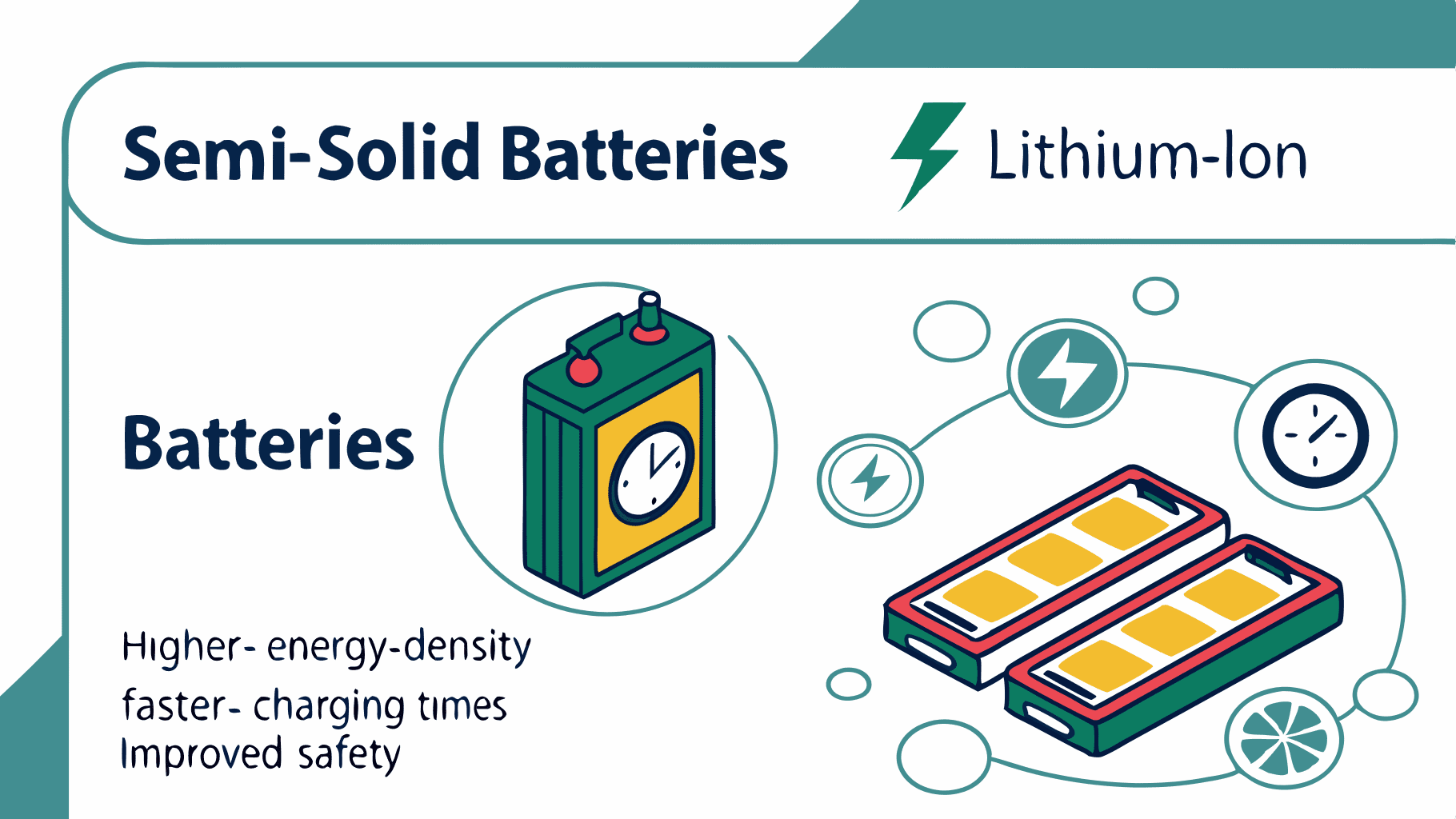
    Semi-Solid Batteries are reshaping drone energy solutions, outperforming traditional Lipo batteries in key scenarios. As drone tasks grow more demanding, this shift from liquid to gel-based electrolytes becomes inevitable.

    Core Parameter Differences: Semi-Solid vs. Lipo Batteries

    Side-by-side comparisons reveal clear gaps in performance and durability. DEFNOCO, a drone battery specialist with its own cell factory, highlights these variances through real-world data.
    ParameterLipo Batteries (Typical)Semi-Solid Batteries (2025 Standard)
    Energy Density200-250 Wh/kg300-350 Wh/kg
    Cycle Life200-300 cycles800-1200 cycles
    Operating Temp Range-10°C to 45°C-40°C to 60°C
    Safety RiskLiquid leakage, thermal runawayNegligible leakage, high heat resistance
    Charge Retention (500x)~50% capacity~88% capacity
    DEFNOCO’s Lipo batteries already outperform generics by 18+ minutes of flight time. Yet its semi-solid models double that advantage for industrial tasks.

    Unique Advantages of Each Battery Type

    Both technologies serve distinct needs, but semi-solid batteries gain edge in tough scenarios.

    Lipo Batteries: Reliable for Everyday Use

    Lipo batteries excel in accessibility and responsiveness. DEFNOCO’s Lipo models weigh 20% less than bulkier alternatives, boosting drone agility. They deliver instant power for FPV racing and hobby flights. Fast-charging capabilities reduce downtime, ideal for casual users. Their lower cost also makes them popular for entry-level drones and short-duration tasks.

    Semi-Solid Battery: Built for Extreme Demands

    Semi-solid batteries solve Lipo’s critical pain points. Their gel electrolytes eliminate leakage risks, a key safety upgrade. In 2025 tests, DEFNOCO’s semi-solid battery worked smoothly at -15°C, unlike Lipos that falter in cold. Construction crews now use them for 10-hour survey shifts without mid-task failures. Their 1200-cycle life cuts replacement costs by 60% for commercial operators.

    Why 2025 Marks the Shift to Semi-Solid Battery

    Three key factors drive the adoption of semi-solid batteries this year.
    First, industrial demand outpaces Lipo limits. 2025 data shows 78% of commercial drones need >30-minute flight time. Semi-solid’s 350 Wh/kg density meets this need, as seen in DEFNOCO’s 2025 launch of 350 Wh/kg models. DEFNOCO’s clients report 40% longer agricultural spraying sessions with its semi-solid battery.
    Second, safety regulations tighten. 2024-2025 saw 12 drone fires linked to Lipo leakage. Semi-solid’s thermal stability complies with new aviation safety standards. DEFNOCO’s semi-solid designs passed 2025 FAA anti-thermal-runaway tests with zero failures.
    Third, costs drop to competitive levels. Mass production in 2025 brought semi-solid battery prices down by 35%. For businesses, longer cycle life offsets higher upfront costs. A 2025 survey found 62% of industrial users plan to switch within 12 months.
    Semi-Solid Batteries

    The Future: Semi-Solid as the New Standard

    Semi-Solid Batteries no longer sit in labs—they power real-world missions in 2025. From high-altitude power inspect to Arctic logistics, they outperform Lipos in reliability and endurance. DEFNOCO’s investment in semi-solid tech reflects this trend, balancing innovation with practical usability.
    As drone tasks grow more ambitious, semi-solid batteries aren’t just an upgrade—they’re a necessity. Their blend of safety, durability, and performance makes 2025 the year they move from “future tech” to “everyday essential.”
    References
    1. DEFNOCO. DEFNOCO Drone Lipo Batteries: Powering Uninterrupted Flights[EB/OL]. [2025-07-15]. 
    2. Grepow. Grepow Launches Revolutionary Semi-Solid Batteries for Drones[EB/OL]. [2025-02-18]. http://www.ace-pow.com/archives/27413.
  • Drone Rental: Opportunities and Risks in Low-Altitude Economy​

    Drone Rental: Opportunities and Risks in Low-Altitude Economy​

    Drone Rental: Opportunities and Risks in Low-Altitude Economy​

    Drone Rental is growing from a niche travel demand to a 100-billion market opportunity. This “light-asset experience” model lowers tech barriers but hides unsolved industry problems.

    2024-2025: Explosive Growth of Rental Business

    The rise of drone rental stems from dual drivers: cost and demand.
    In 2024, China’s 3C digital rental market neared 27 billion yuan, with drones growing fastest. By 2025, holiday shortages became normal: a Ningbo store rented out over 10 drones 2 weeks early, at 200-300 yuan/day. Ma’anshan users preferred budget models, with 50-100 yuan/day making aerial photography accessible.
    The logic is clear: professional drones cost tens of thousands yuan, often idle after purchase. Mr. Yan, traveling in Xinjiang, found renting insured wind-resistant models far cheaper than buying. This “on-demand rental” fits travel, weddings, and other scenario-based needs.

    On the Cusp: Three Opportunities for Drone Rental

    Low-altitude economy expansion opens broader space for drone rental.
    Diversified Scenarios drive growth first. Beyond travel photography, enterprise demand for agriculture and surveying surges. Companies avoid depreciation by renting high-load drones for short projects. 2025 data shows wind-resistant models with >30-minute battery life are most popular, reflecting performance demands.
    Tech Upgrades keep empowering the industry. 5G+VR remote control boosts usability, while battery breakthroughs act as key support. DEFNOCO, a drone battery specialist with its own cell factory, developed high-stability batteries with >30-minute endurance. Its products now serve as standard for many rental providers, solving battery anxiety.
    Shifting Consumption Mindsets lay market foundations. Young people prefer “experience over ownership.” Rental aligns with eco and cost needs, pushing 2025 market growth.

    Hidden Risks: Four Challenges for Rental Business

    Rapid growth comes with notable risks and challenges.
    Equipment Damage and Compensation tops the list. Rental drones face frequent outdoor use, with bumps and water damage common. User mishandling causes disputes often. A Zhejiang store reported 40% higher holiday repair rates.
    Endurance and Efficiency Bottlenecks limit development. Mainstream models last <4 hours; high-load tasks need frequent battery swaps. Hydrogen tech remains uncommon. Despite support from DEFNOCO, industry-wide endurance needs improvement.
    Compliance Risks grow prominent. Many regions require drone registration. Rental providers must verify user qualifications or face penalties. 3 2025 disputes entered legal proceedings over “unqualified flights.”
    Intensified Competition squeezes profits. New entrants trigger price wars. Small vendors cut costs with refurbished batteries or old models, creating safety hazards.
    Drone Rental

    Solutions: From “Equipment Rental” to “Solution Provision”

    The key to risk mitigation lies in shifting from single rental to integrated services.
    Rental providers can partner with upstream firms like DEFNOCO, using original battery-equipment packages to reduce failures. They should also build “tech + insurance” systems: offer basic training and equipment insurance to cut compensation disputes.
    For users, choosing compliant providers and reliable equipment is critical. DEFNOCO-powered drones deliver stable endurance and safety-focused cell designs, lowering flight risks.
    Drone Rental opportunities keep expanding, but only players balancing experience, safety, and compliance will succeed in the low-altitude economy. Just as DEFNOCO supports equipment performance with battery tech, rental providers must build market foundations with service capabilities—that’s the key to long-term growth.
    References
    1. CCTV News. Travel with an “Aerial Photographer”! Drone rental market booms ahead of holidays[EB/OL]. [2025-09-20]. http://m.toutiao.com/group/7551854133997732367/?upstream_biz=doubao.
    1. Industry Analysis. Drone Rental: New opportunity in low-altitude economy, unlocking 100-billion market[EB/OL]. [2025-05-08]. http://www.shurl.cc/c0f83195572ce8a78286d68ec0923ffc.
    1. Lvdao. National Day & Mid-Autumn trend: Rent drones to see the world[EB/OL]. [2025-09-21]. http://m.toutiao.com/group/7552366792246460962/?upstream_biz=doubao.
  • Lipo Battery Voltage: How It Shapes Drone Performance

    Lipo Battery Voltage: How It Shapes Drone Performance

    Lipo battery voltage directly impacts drone flight—too low or high ruins missions or damages gear. Understanding its role ensures safer, more efficient flights.

    Why Lipo Battery Voltage Matters for Drones

    Lipo battery’s voltage determines power output and flight time. Each cell holds ~3.7V; drones use multiple cells (marked as “S” for series).
    • Power Delivery: Higher voltage battery drives motors faster, boosting speed and payload capacity. A 4S (14.8V) battery outperforms a 3S (11.1V) model.
    • Flight Time: Stable voltage maintains consistent performance. Dropping below 3.2V per cell risks permanent battery damage.
    • Safety: Overvoltage (above 4.2V/cell) causes swelling; undervoltage triggers sudden power loss mid-flight.

    Scenarios and Requirements

    Different drone uses demand specific voltage setups. DEFNOCO tailors its batteries to these needs:
    • FPV Racing Drones: Need 4S-6S (14.8V-22.2V) voltage for quick acceleration. DEFNOCO’s 150C lipo batteries deliver this, enabling sharp turns.
    • Agricultural Drones: Rely on 4S-5S (14.8V-18.5V) for steady power. Higher voltage supports sprayers and 35-minute flights.
    • Hobby/Photography Drones: 3S-4S (11.1V-14.8V) balances endurance and weight. Prevents camera shake from unstable power.
    Lipo battery voltage

    Tips to Manage Lipo Battery Voltage

    Protect your battery and drone with these habits:
    • Check Voltage Before Flights: Use a tester to avoid undervolted starts.
    • Avoid Overcharging: Stop at 4.2V per cell (e.g., 16.8V for 4S batteries).
    • Land Early: Return when voltage drops to 3.7V per cell to preserve battery life.
    Lipo battery voltage is the unsung hero of drone performance. Match it to your use case—whether racing or farming—and trust brands like DEFNOCO for stable, tailored power. Your flights will be longer, safer, and more reliable.
  • Decades of Drone Innovation: A Timeline of Key Milestones

    Decades of Drone Innovation: A Timeline of Key Milestones

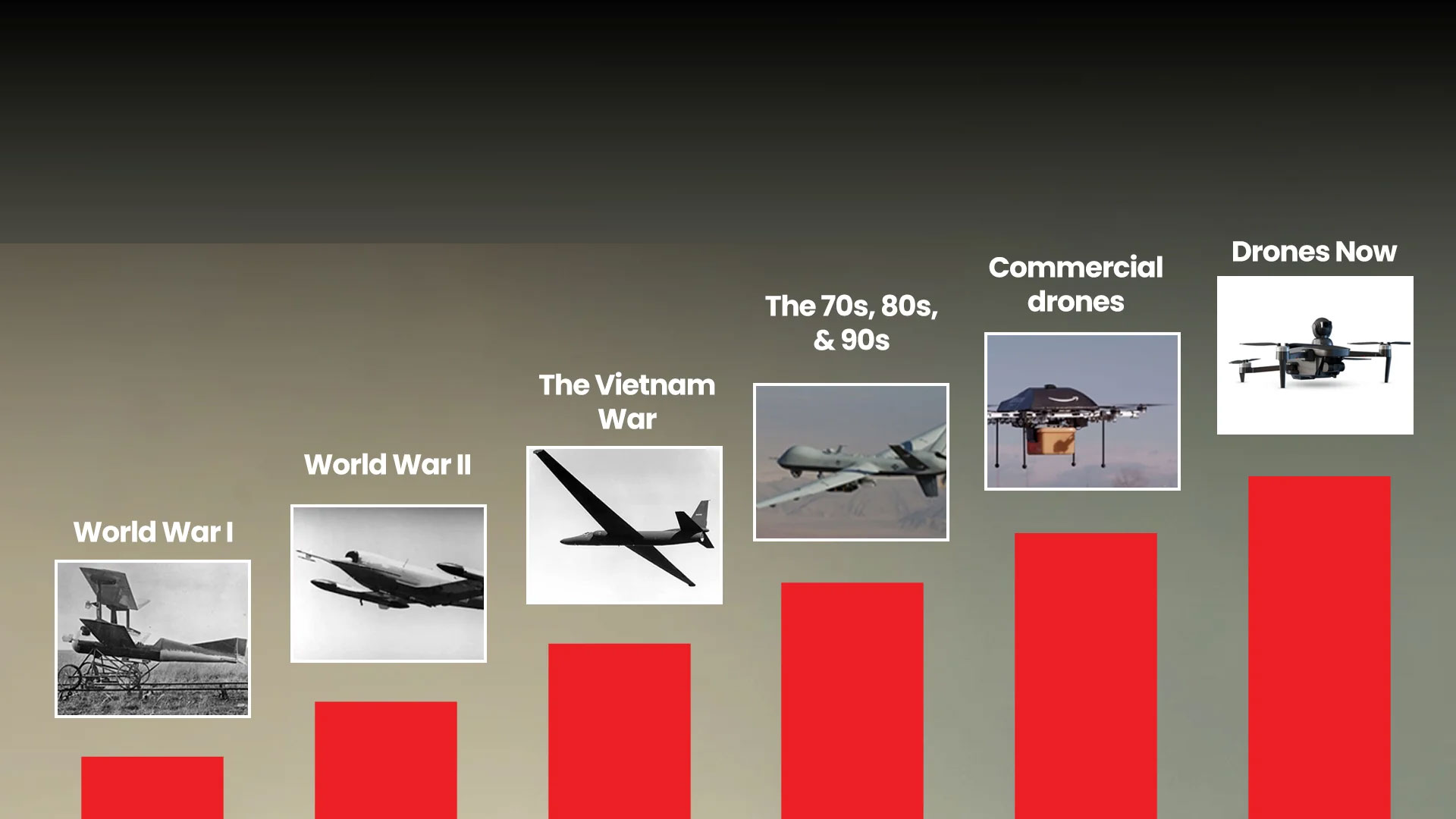
    Drone technology has evolved from experimental prototypes to transformative tools shaping industries and warfare. Let’s trace its journey through pivotal moments and breakthroughs.

    Early Beginnings: Military Roots of Drone Technology

    The concept of pilotless aircraft emerged in the early 20th century, driven by military needs.


    • 1917: The first radio-controlled drone, the Sopwith Aerial Target, took flight in Britain. Developed for military training, it laid the groundwork for future systems. (Source: Smithsonian National Air and Space Museum)
    • 1935: The U.S. Navy coined “drone” for its remote-controlled target aircraft, emphasizing single-purpose use.
    • 1944: Germany’s V-1 flying bomb demonstrated automated aerial weapons’ destructive potential.


    During the Cold War, drone technology advanced rapidly. The U.S. Ryan Firebee (1951), a jet-powered drone, aided Vietnam reconnaissance. (Source: U.S. Air Force Historical Research Agency)

    1982: Israel’s Game-Changing Drone Tactics

    The 1982 Lebanon War marked a turning point. Israel deployed drones in the Battle of the Bekaa Valley to neutralize Syria’s SAM-6 batteries.


    • Drone Swarm Strategy: “Scout” and “Mastiff” drones for reconnaissance; “Dafna” decoys lured radar systems.
    • Outcome: Israel destroyed 19 SAM sites in hours, suffering no aircraft losses. (Source: Israeli Ministry of Defense)


    This victory proved drones’ value in modern warfare, prompting global adoption.

    2000s: Consumer Drone Revolution

    The 2000s saw drone technology shift from military to civilian use.


    • 2006DJI Innovations launched the Phantom 1, a consumer quadcopter with stabilized photography. (Source: DJI Official Archives)
    • 2016: The Phantom 4 introduced obstacle avoidance, setting a new consumer standard.


    Military drones also evolved— the U.S. MQ-9 Reaper became key for counterterrorism.

    2020s: AI and Autonomous Systems

    Today, drone technology integrates AI for advanced autonomy.


    • 2024: The U.S. Air Force unveiled the XQ-67A Gremlins, autonomous drones for F-35 support. (Source: U.S. Air Force Official Site)
    • Ukraine War: Both sides deployed cheap drones for surveillance and attacks, reshaping warfare.


    Drone technology

    Future Horizons

    From 1917’s prototypes to 2024’s AI swarms, drone technology redefines possibilities. With innovations like DEFNOCO’s semi-solid state batteries, its potential grows.


    Whether mapping disaster zones or aiding defense, drones embody relentless innovation. Fly responsibly—you might shape its next chapter.

Send A quote