
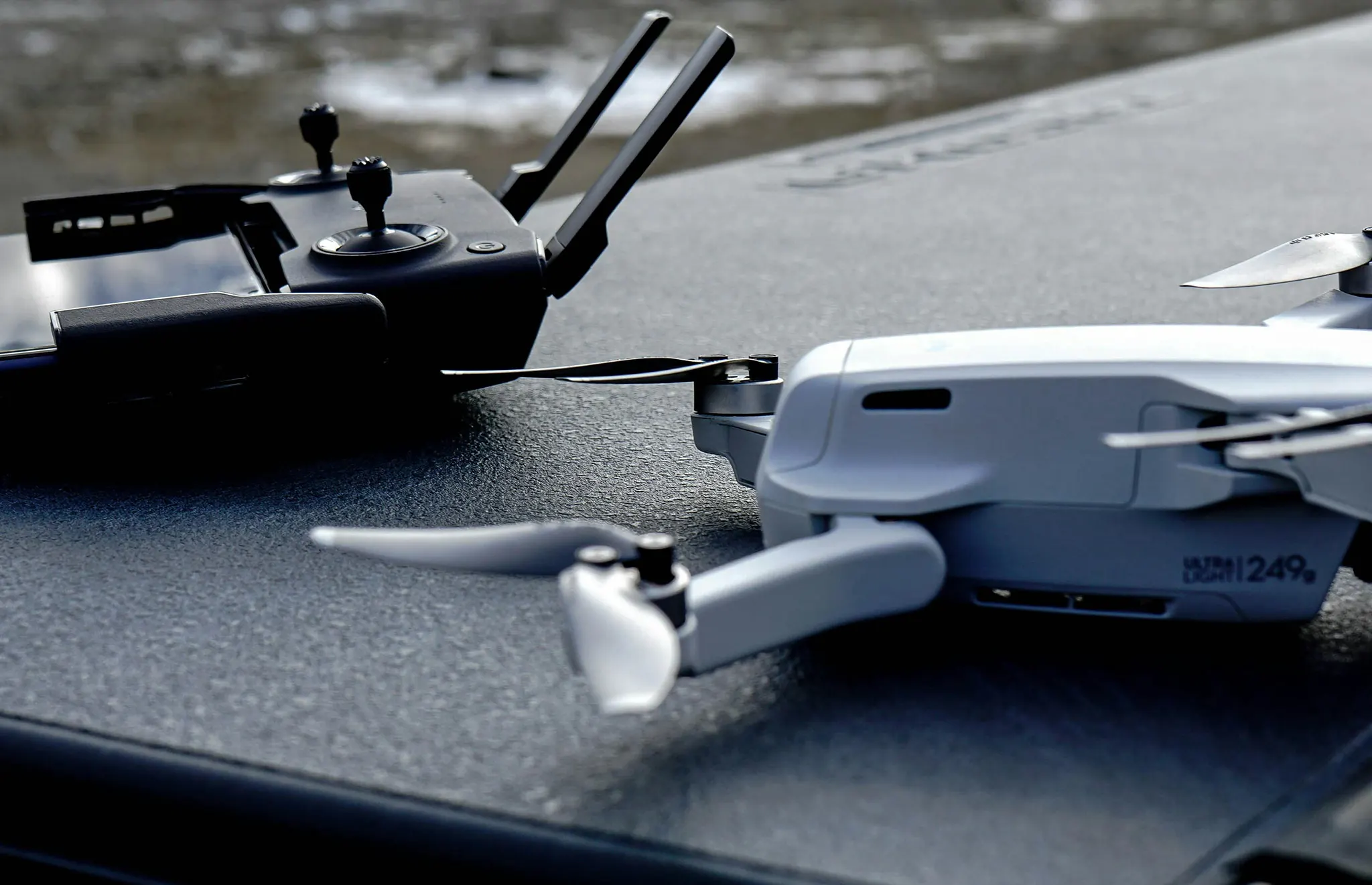
For first-person-view (FPV) drone pilots, the battle has always been the same: the agonizing trade-off between power and flight time. A battery capable of explosive acceleration for freestyle racing typically dies in minutes, while a pack built for long-range cinematic flights often lacks the punch for quick maneuvers. In 2026, however, that compromise is finally being broken. Driven by warzone innovation, smarter management systems, and high-voltage architectures, the FPV battery market is undergoing its most significant transformation since the adoption of lithium-polymer (LiPo) cells.
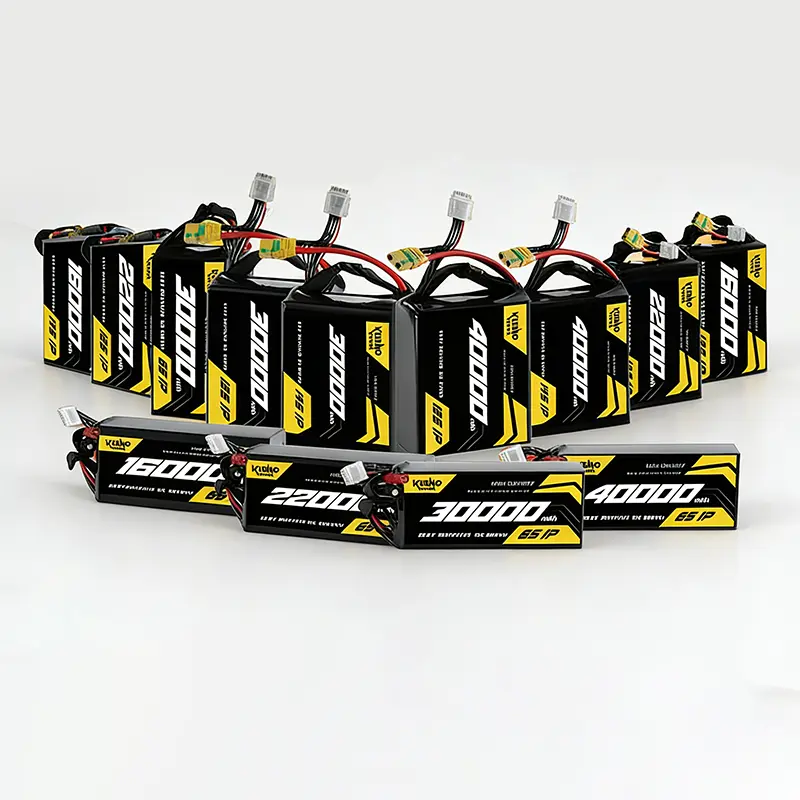
The New Math: Twice the Range, Same Weight
The most dramatic leap in FPV battery technology is coming from an unlikely source: the battlefields of Ukraine. Ukrainian company DP Battery has unveiled a new generation of semi-solid lithium batteries boasting an energy density of 400 watt-hours per kilogram—roughly double that of standard 18650 or 21700 lithium-ion cells, which typically max out around 240 Wh/kg .
For FPV operators, the implications are staggering. According to Danylo Pavliuk, CEO of DP Battery, a typical FPV drone on a 15-inch frame carrying a 1.5 kg payload might achieve a range of about 70 kilometers with conventional commercial batteries. With the new semi-solid cells, that range jumps to over 100 kilometers .
“Given the trends on the front line, it is no longer enough to simply fly straight ahead and complete the mission,” Pavliuk explained at the Brave1 Components conference. “You need to look for detours, fly around electronic warfare zones, firing zones, and so on. This is where this technology gives a real advantage” .
Alternatively, pilots can choose to keep the same range but carry significantly more payload. Pavliuk noted that a 5-kilogram assembly of solid-state batteries replaces a traditional lithium-ion pack that would weigh “a little over a kilogram” more . The technology is particularly impactful on larger platforms, where flight time increases can reach up to 60 percent. DP Battery’s own bomber drone, for instance, can now fly for 80 minutes and cover over 70 kilometers—double its previous endurance .
The catch? Price. These high-energy-density semi-solid batteries cost roughly twice as much as classic lithium-ion packs of similar capacity, placing them firmly in the premium tier for now .
High Voltage, High Performance: The Rise of 8S Systems
While semi-solid technology promises a future leap, the present is seeing a rapid shift toward higher-voltage architectures for demanding FPV applications. Tattu, a leading name in drone power, has released a new line of 8S LiPo batteries specifically engineered for 13–15 inch FPV platforms .
The core advantage of moving from traditional 6S to 8S systems is “voltage headroom.” By operating at a higher nominal voltage (29.6V), an 8S system can deliver the same power while drawing less current. This reduction in current minimizes heat buildup during high-load flights and ensures more stable power delivery to motors and electronic speed controllers (ESCs) from takeoff to landing .
For pilots flying large propeller setups, the benefits are tactile. “Large propellers are heavier and respond more slowly to sudden power changes,” Tattu engineers note. The additional voltage headroom results in smoother, more linear throttle response—especially in the critical mid-throttle range where most FPV flying occurs . The new Tattu 8S lineup ranges from 5600mAh to a massive 22000mAh, catering to cinematic, long-range, and heavy-load FPV missions .
Safety at these higher voltages is also addressed, with the batteries equipped with genuine XT90-S anti-spark connectors to prevent electrical surges during connection, protecting sensitive flight electronics .
The Smart Brain: Why BMS Matters More Than Capacity
As batteries become more powerful, the intelligence required to manage them has become equally critical. Industry experts warn that focusing solely on capacity or C-rating ignores a more fundamental factor: the Battery Management System (BMS) .
For the ubiquitous 1300mAh battery—a standard for FPV racers, freestyle drones, and lightweight UAVs—the BMS is the difference between reliable performance and catastrophic failure. These small packs must handle high burst currents, rapid charge-discharge cycles, and tight thermal margins. Without sophisticated oversight, they are prone to voltage collapse, swelling, and even thermal runaway .
A smart BMS acts as the battery’s central nervous system, continuously monitoring voltage, current, and temperature. It prevents overcharging beyond safe limits, automatically cuts off power at minimum voltage thresholds, and balances individual cells to ensure uniform aging. According to Ayaa Technology, a battery equipped with a robust BMS can see its usable lifespan extended by 30 to 50 percent compared to an unmanaged counterpart .
“The 1300mAh drone battery is a system component that directly impacts flight safety, operating costs, and brand dependability; it is more than just an energy container,” the company states. For professional pilots and integrators, investing in BMS-protected batteries is now seen as essential for lowering total cost of ownership and ensuring predictable flight behavior .
Market Momentum and the Solid-State Horizon
The rapid evolution in FPV battery tech is unfolding against a backdrop of significant market growth. The global micro FPV drone market, which includes consumer racing drones and light industrial platforms, is projected to grow from USD 6.91 billion in 2025 to USD 17.15 billion by 2032, at a compound annual growth rate (CAGR) of 13.87% . Battery performance remains one of the most critical variables affecting flight safety, endurance, and system reliability in this expanding ecosystem .
Looking further ahead, analysts at QYResearch and other firms point to solid-state and lithium-metal batteries as the next mainstream direction for drone power, moving from laboratories to small-scale commercialization in高端 industrial and specialized scenarios . These technologies promise not only higher energy density but also improved safety and environmental sustainability.
For now, however, the FPV community is benefiting from a three-pronged revolution: semi-solid chemistries delivering record-breaking range, high-voltage 8S platforms offering unprecedented power delivery, and smart BMS technology ensuring that every flight is as safe as it is thrilling. The days of the painful power-versus-endurance trade-off are finally numbered.